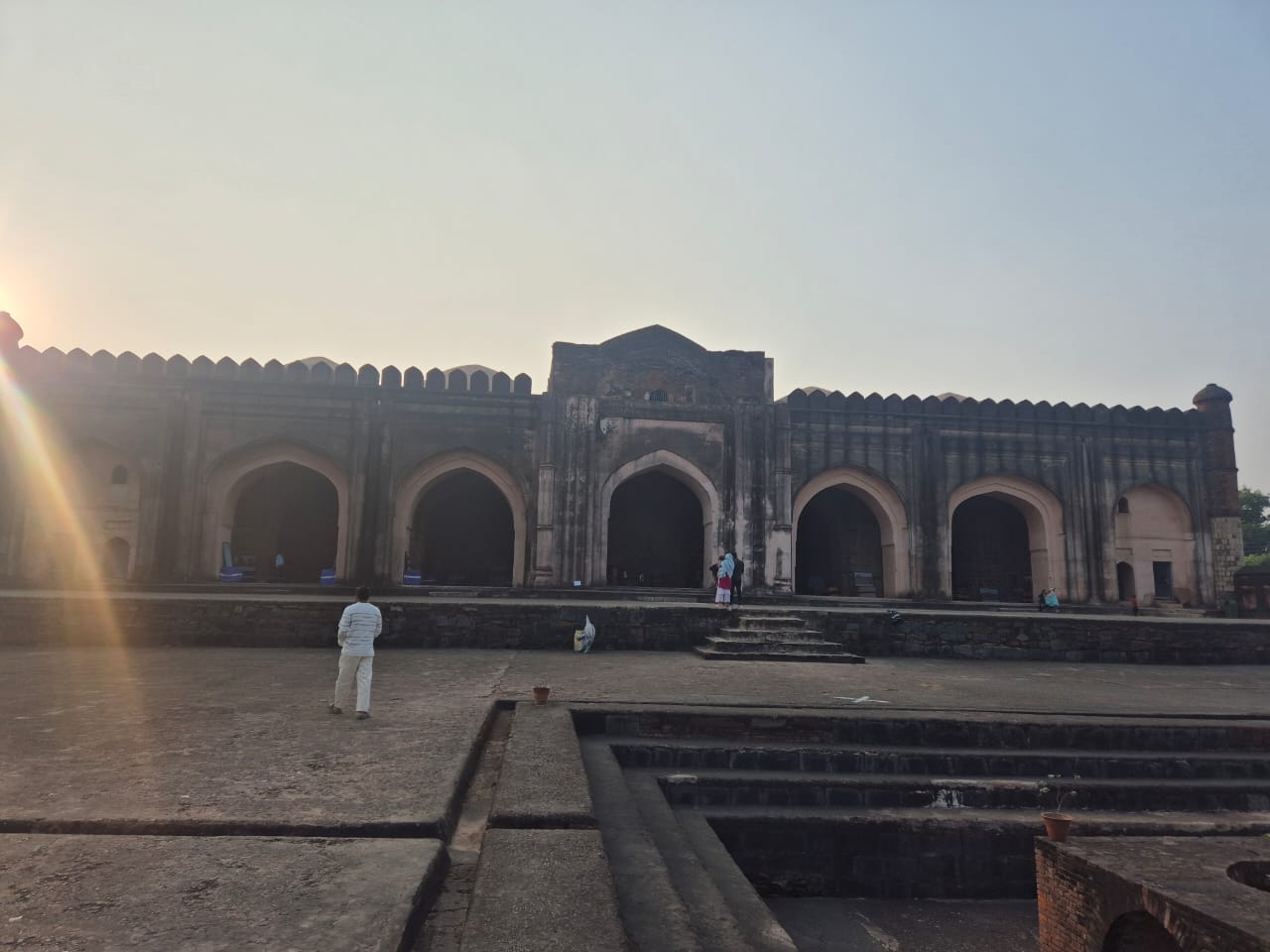
Standing on elevated land known as Hadaf, the mosque reflects the architectural strength and historical importance of Rajmahal during the Mughal era. Today, it remains one of the finest heritage structures in the region and an important reminder of Jharkhand's rich past.
"A symbol of Rajmahal's historical role during the Mughal period."
Historical Background
Jami Masjid was constructed during a time when Rajmahal had become politically significant. In 1592 AD, the capital was shifted from Gaur to Rajmahal after changes in the course of the Ganga River and the impact of a major epidemic in earlier years.
As Rajmahal grew in importance, monumental structures were built in the region. Jami Masjid became one of the most prominent among them. The mosque was later declared a Centrally Protected Monument in 1915, recognising its historical and architectural value.
Meaning of Hadaf
The mosque is situated on a raised area called Hadaf, an Arabic word associated with the target used in archery practice. This elevated location gives the structure a commanding presence and adds to its visual significance.
Architecture of Jami Masjid
Jami Masjid Rajmahal was originally built on a large scale and designed in classic Mughal style. Its main features included:
- A spacious prayer hall on the western side
- A large open courtyard
- High boundary walls with arched recesses inside
- Three gateways on the north, south, and east sides
- Main eastern entrance with a porch
The original dimensions of the complex were approximately 76.20 metres x 64.00 metres. Although parts of the northern and southern sections collapsed over time, the remaining structure still showcases its grand scale.
Prayer Hall Design
The prayer chamber contains a large central hall that appears two-storeyed from the outside because of tall windows and continuous parapet detailing. The western wall includes decorative niches with floral stucco patterns, reflecting artistic craftsmanship of the Mughal period.
Present Condition and Conservation
Over the years, weathering and structural damage affected portions of the mosque. At present, conservation and restoration efforts have been undertaken by the Archaeological Survey of India (ASI), Ranchi Circle. These efforts aim to preserve the monument for future generations.
Why Jami Masjid Matters
Jami Masjid Rajmahal is more than a mosque. It is a symbol of Rajmahal's historical role during the Mughal period. It represents:
- Mughal-era architecture in Jharkhand
- Historical importance of Rajmahal town
- Cultural heritage of Sahibganj district
- Legacy of Raja Man Singh's administration
How to Reach Jami Masjid Rajmahal
Jami Masjid is located in Mangalhat, Rajmahal, Sahibganj, Jharkhand. Approximate distances:
- Sahibganj: 32 km
- Ranchi: 480 km
Nearest transport points:
- Nearest Railway Station: Rajmahal Railway Station
- Nearest Bus Stand: Rajmahal Bus Stand
- Nearest Airport: Deoghar Airport
Visitors can take an auto-rickshaw or local transport from Rajmahal town.
Nearby Places to Visit
If you are exploring Rajmahal, you may also visit:
- Baradari Rajmahal
- Akbari Masjid
- Rajmahal Hills
- Ganga riverfront areas
Best Time to Visit
The best time to visit is from October to March, when weather remains pleasant for sightseeing and photography. Morning and evening hours are ideal for exploring heritage sites.
Conclusion
Jami Masjid Rajmahal stands as one of Jharkhand's most impressive historical monuments. With its Mughal architecture, elevated location, and connection to the rise of Rajmahal as a capital city, it remains a place of deep cultural and historical significance. For visitors interested in architecture, history, and heritage travel, this monument is one of the finest places to explore in Sahibganj district.